
· 4 min read · Gaia Lab
The experimental vehicle: a 5G lab on wheels
Introducing Gaia Lab's experimental vehicle: sensors, radios and edge computing on an electric UTV, the mobile edge of the campus 5G network.
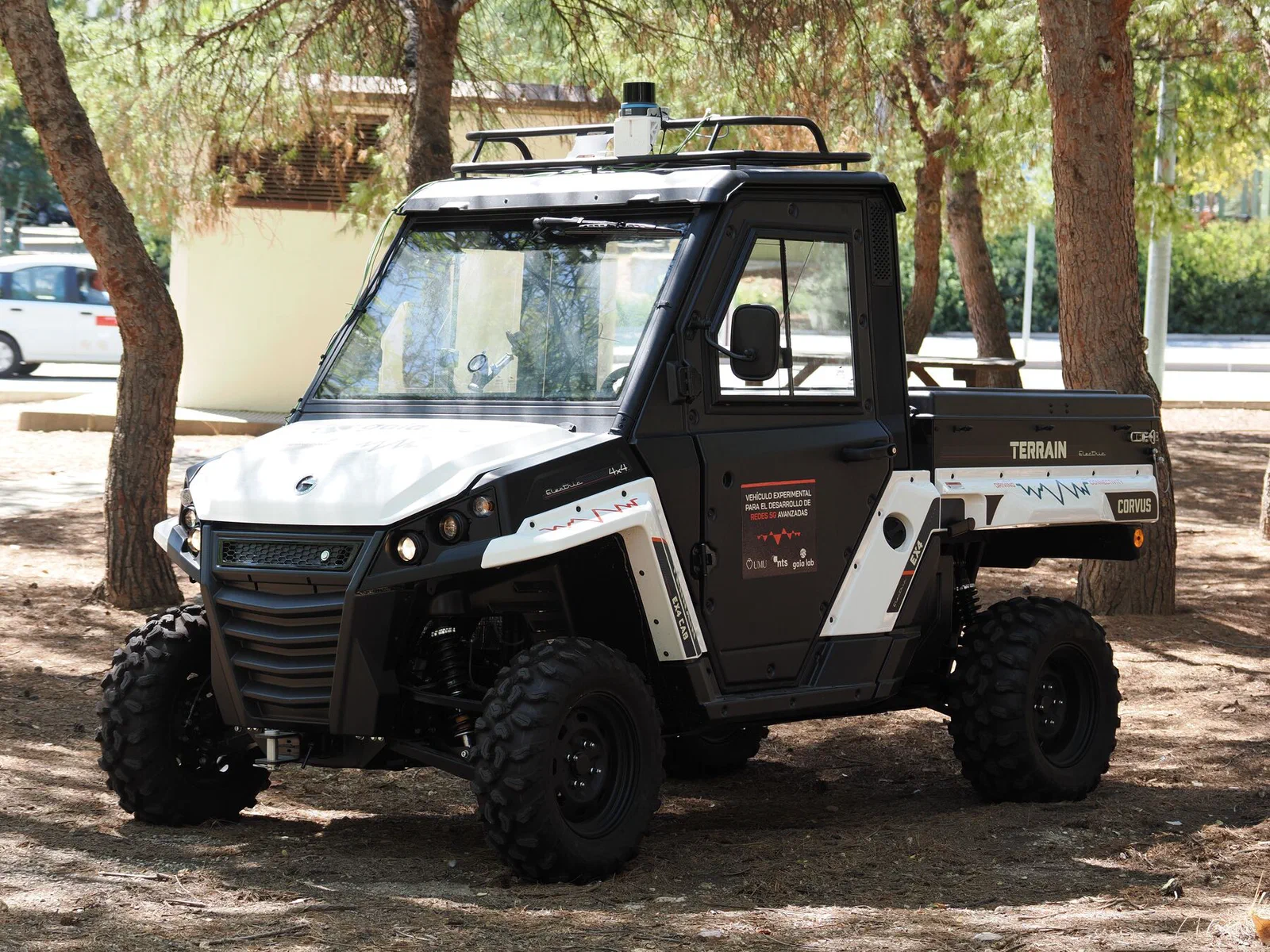
At Gaia Lab, the 5G and B5G technology experimentation laboratory of the ANTS group at the University of Murcia, we have put into service a multidisciplinary experimental vehicle for several research lines: 5G and B5G networks, vehicular communications, perception, IoT and edge computing.
Why a lab on wheels #
Many applications that depend on connectivity can only be evaluated on the move and on real terrain: high-resolution video, digital twins at the edge, cooperative communications or georeferenced multi-sensor data. We needed a mobile edge for the Espinardo Campus’s private 5G network, equipped with sensors, radios and computing.
The base platform is a 100 % electric UTV with 4×4 drive (a Corvus Terrain EX4 built in Librilla, Murcia). Out of the box it provides mobility and power; the rest of the equipment is the laboratory’s own work.
What it carries on board #
Perception and positioning #
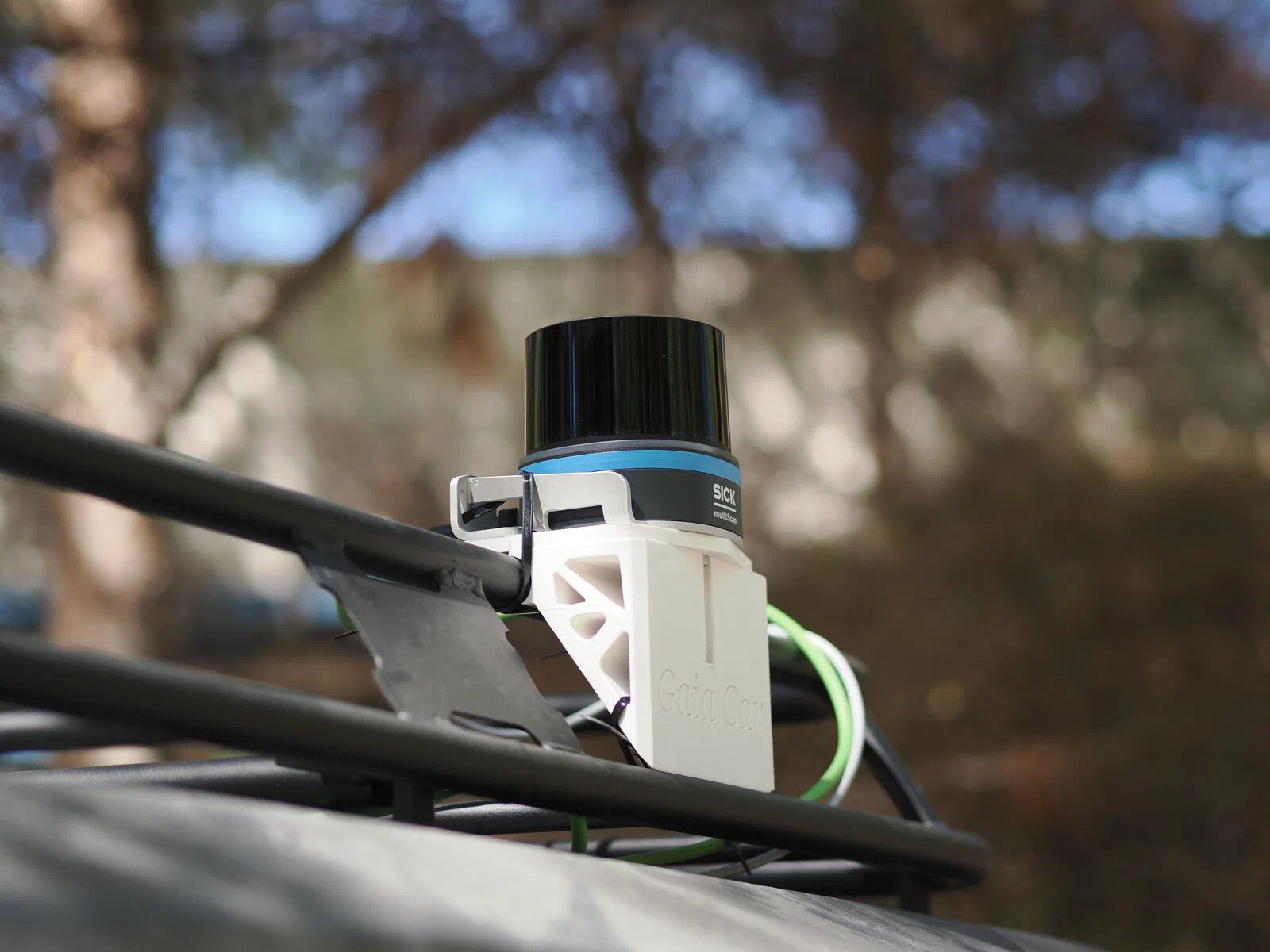
On the roof rack sits a 3D LiDAR, a SICK laser scanner that generates a 360° point cloud for mapping, obstacle detection and navigation, and which also serves as a source of heavy data for the network tests.
The roof also carries the high-precision GNSS antenna, which georeferences every measurement and every sensor reading and feeds the position and speed messages broadcast in real time.
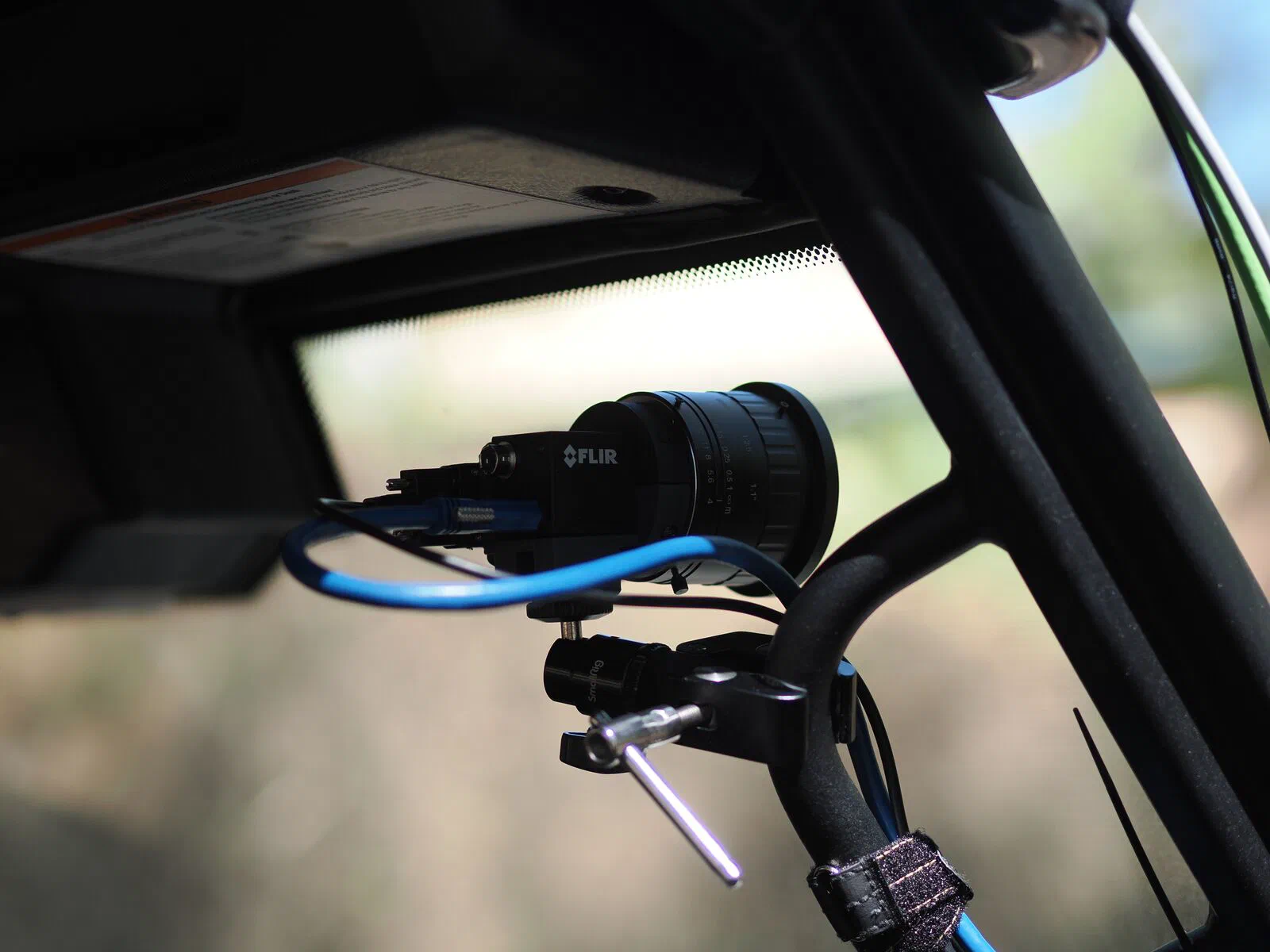
On the A-pillar is the multispectral camera, which captures beyond the visible spectrum and provides a high-rate video stream for transmission and edge-processing tests.
On-board and edge computing #
Under the bonnet is the on-board computing unit, powered from the battery through the fuse box. It processes the sensors in the vehicle itself (capture, perception, AI and digital twin) without depending on the cloud for anything critical.
Added to this is a rack for equipment up to 8U with server-class edge computing, which runs in the vehicle the network, processing and AI services that would normally live in a data centre.
Radios: 5G, IoT and V2X #
The 5G antennas are mounted on the front and, together with the on-board modem, link up with the campus’s private 5G SA network. Over that link we test, on the move, 4K video resilient to coverage loss and AI-based prediction of handover between base stations.
Two more radios travel in the cab. A LoRaWAN radio at 868 MHz integrates the vehicle with the campus IoT, to correlate its data with the infrastructure’s (traffic, energy, environment). An OBU provides V2X connectivity: cooperative messages with other vehicles and with the campus roadside units over PC5 / ITS-G5 and 5G.
Power #
The battery powers all the equipment and accepts solar panels of up to 10 kWh through the on-board charger, to extend field tests and operate far from the electricity grid.
Equipment summary #
| Item | Where it is mounted | What it is for |
|---|---|---|
| 3D LiDAR (SICK) | Roof rack, roof | 360° point cloud: mapping, obstacles, navigation |
| High-precision GNSS | Antenna on the roof | Georeferencing measurements and sensors |
| On-board computing unit | Bonnet | Capture, perception, AI and digital twin |
| Server-class edge computing | Rack, up to 8U | Network, processing and AI services on board |
| 5G connectivity | Front antennas, modem | Link with the campus 5G network |
| IoT connectivity | Radio in the cab | LoRaWAN 868 MHz link with the campus |
| V2X connectivity | OBU in the cab | Cooperative messages over PC5 / ITS-G5 and 5G |
| Multispectral camera | A-pillar | High-rate video beyond the visible spectrum |
| Battery and solar panels | Vehicle battery; solar input on the on-board charger | Power for all the equipment; panels of up to 10 kWh |
Deployable tactical network #
The vehicle can deploy a fully functional tactical network on its own for tests and emergencies: it arrives on site, brings up the network with its radios and edge computing and provides connectivity without depending on fixed infrastructure.
Projects #
The vehicle has been used in the R3CAV, UNICO5G-CERBERUS, NANCY and 5GASP projects, and on the Espinardo Campus we have recorded demonstrations for NANCY, EMPYREAN and 5GASP. In the NANCY demonstration, the vehicle drives around the campus while its tasks are offloaded to the network edge and the quality of the 5G link is tracked. In the EMPYREAN one, its virtual OBU is instantiated on the nearest edge node and migrates between nodes as it moves around the campus. In 5GASP we recorded real-time telemetry from the cab: coverage, messages and link metrics over the map. We will be publishing the results and videos here.