
· 4 min read · Gaia Lab
What it connects to: the 5G and B5G experimentation infrastructure of the Espinardo Campus
A tour of the 5G SA network, the V2X units, the LoRaWAN network, the data centres and the programmable network that support Gaia Lab's experimentation.
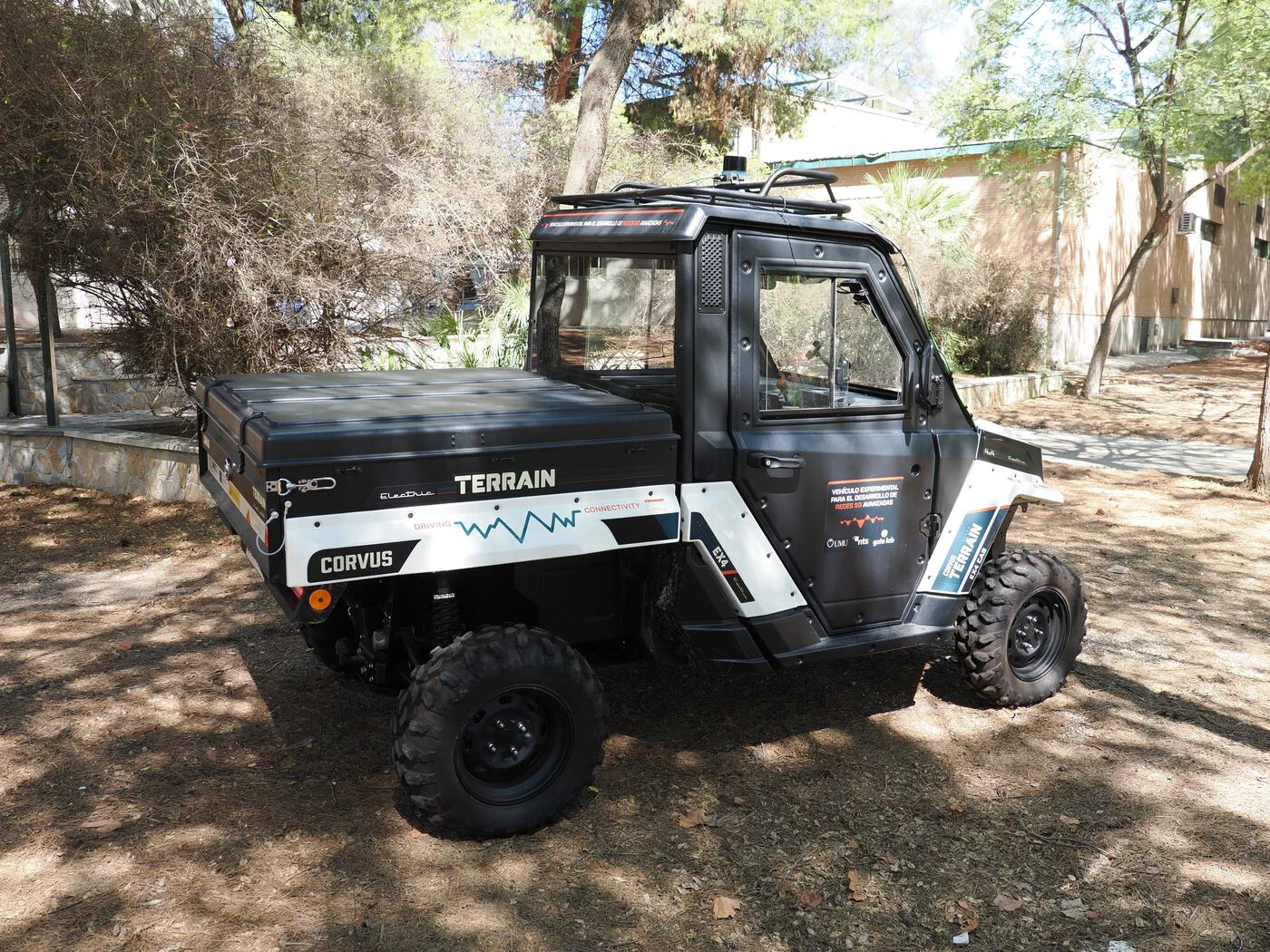
When we present the experimental vehicle we usually dwell on what it carries on board. In this post we turn the question around and explain what it connects to: the vehicle is the mobile edge of the 5G and B5G experimentation infrastructure that we at Gaia Lab, within the ANTS group at the University of Murcia, have deployed on the Espinardo Campus. We describe its five building blocks and how the vehicle closes the loop.
Private 5G SA network #
The foundation is a private, campus-wide 5G network in standalone (SA) mode. It combines software-defined radio (Ettus B210 and N310, BladeSDR) with commercial equipment, and we have cores and radios from Amarisoft, Open5GS, Nokia, OAI and srsRAN. This variety lets us set up the same test on different implementations and compare their behaviour.
Several gNBs spread across campus buildings make trials on the move possible: handover between base stations, its prediction using artificial intelligence and 4K video transmission resilient to coverage loss. The vehicle connects through its 5G modem and external antennas, and every network measurement is georeferenced by the high-precision GNSS receiver.
Cooperative communications: C-ITS / V2X #
For vehicular communications we have dual-role Cohda MK6 units, which act as either roadside or on-board units, deployable on campus, with 5G connectivity, PC5 and C-ITS services. With them we test the exchange of cooperative messages between the vehicle and the infrastructure, and between vehicles, both over PC5 / ITS-G5 and through the 5G network. The OBU in the cab is their mobile counterpart and broadcasts position and speed messages in real time.
Internet of Things: LoRaWAN on campus #
The IoT layer relies on two Kerlink iStation gateways at 868 MHz, with a ChirpStack network server and integration with The Things Network. It collects data from the campus sensors (traffic, energy, environment). Its value for the vehicle lies in correlation: the LoRaWAN radio in the cab lets us cross-reference what the vehicle measures with what the fixed infrastructure measures, in the same place and at the same moment.
Computing and cloud #
B5G network experimentation demands more computing than fits in a vehicle. We have three data centres, ATICA, PLEIADES and GAIA, with more than 1,500 CPUs and close to 15 TB of RAM, orchestrated with Proxmox, OpenStack, OSM and Kubernetes. They run the network cores and the network and artificial intelligence services that do not travel in the vehicle, as well as the digital twins at the network edge.
The vehicle replicates part of this capacity on the move: its on-board computing unit and its server-class edge rack, with room for equipment up to 8U, run services that would normally live in a data centre. This lets us study what is best processed at the edge and what should be sent to the cloud, with the 5G network in between.
Programmable network #
The infrastructure rests on a SONiC backbone with 100 Gbps links between sites and 25/40 Gbps internal links. On top of it we experiment with programmable networks using OpenFlow and P4, and we maintain time synchronisation with PTP. The former lets us reconfigure routing between blocks without touching the cabling; the latter provides a common time reference for the infrastructure equipment.
The vehicle as the mobile edge #
The table summarises each block and its counterpart in the vehicle.
| Block | Equipment | Use in experimentation | Counterpart in the vehicle |
|---|---|---|---|
| 5G SA network | Ettus B210 and N310, BladeSDR; Amarisoft, Open5GS, Nokia, OAI, srsRAN; several gNBs | Tests on the move, handovers between gNBs, 4K video | 5G modem and external antennas |
| C-ITS / V2X | Dual-role Cohda MK6 | Cooperative messages over PC5 / ITS-G5 and 5G | OBU in the cab |
| LoRaWAN IoT | Two Kerlink iStation at 868 MHz, ChirpStack, The Things Network | Correlation with campus sensors | LoRaWAN radio in the cab |
| Computing and cloud | ATICA, PLEIADES and GAIA; > 1,500 CPUs, ~15 TB RAM; Proxmox, OpenStack, OSM, Kubernetes | Network cores and services, digital twins | Computing unit and edge rack up to 8U |
| Programmable network | SONiC backbone, 100 Gbps between sites, 25/40 Gbps internal, OpenFlow, P4, PTP | Interconnection, SDN experiments, synchronisation | The vehicle’s internal network |
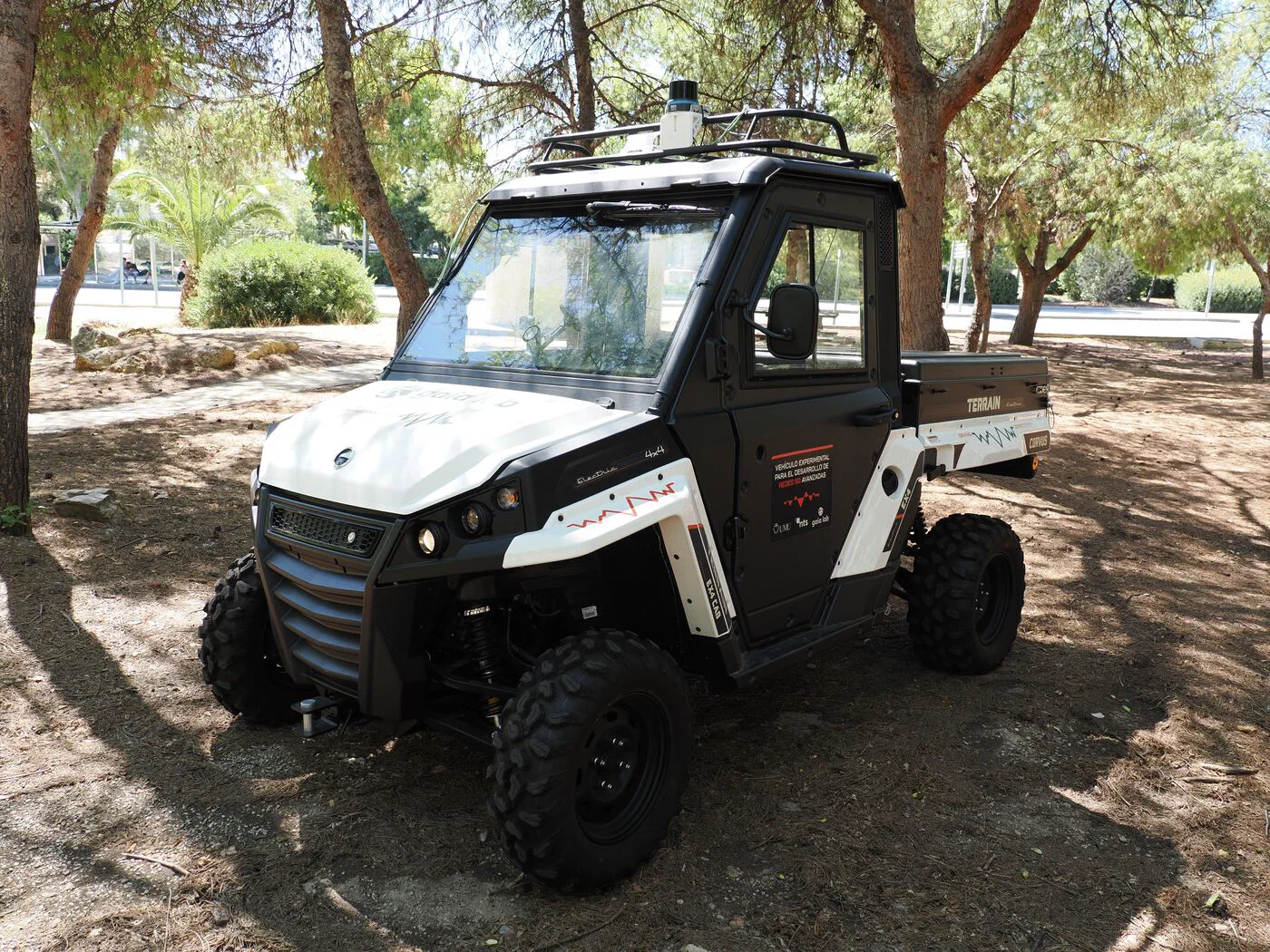
Seen this way, the vehicle is the point where all these blocks come together on the move and on real terrain: it uploads what its sensors capture to the 5G network, exchanges cooperative messages with the roadside units and splits the computing between its edge rack and the data centres.
In upcoming posts we will document each block separately.