
· 4 min read · Gaia Lab
Welcome to the Gaia Lab blog
We are opening the blog of Gaia Lab, the 5G and B5G experimentation laboratory of the ANTS group at the University of Murcia: who we are, what we will publish and how to follow it.
With this post we open the Gaia Lab blog. Before publishing deployment notes, results and guides, it is worth putting in writing who we are, what we do and what anyone following these pages can expect.
What Gaia Lab is #
Gaia Lab is the 5G and B5G technology experimentation laboratory of the ANTS group, part of the Department of Information and Communications Engineering at the University of Murcia. Our motto, “Driving connectivity”, sums up the intent: to design, deploy and measure communication networks on real infrastructure, not just in simulation.
That infrastructure is deployed on the Espinardo Campus. Its core is a private 5G SA network that combines software-defined radio (Ettus B210 and N310, BladeSDR) with commercial equipment, with cores and radios from Amarisoft, Open5GS, Nokia, OAI and srsRAN and several gNBs spread across buildings. The rest of the resources are arranged around it:
| Resource | Description |
|---|---|
| C-ITS / V2X | Dual-role roadside and on-board units (Cohda MK6) with 5G, PC5 / ITS-G5 and C-ITS services |
| LoRaWAN IoT | Two Kerlink iStation gateways at 868 MHz, a ChirpStack network server and integration with The Things Network |
| Computing and cloud | Three data centres (ATICA, PLEIADES and GAIA): more than 1,500 CPUs and close to 15 TB of RAM with Proxmox, OpenStack, OSM and Kubernetes |
| Programmable network | SONiC backbone with 100 Gbps links between sites and 25/40 Gbps internal links, OpenFlow, P4 and PTP synchronisation |
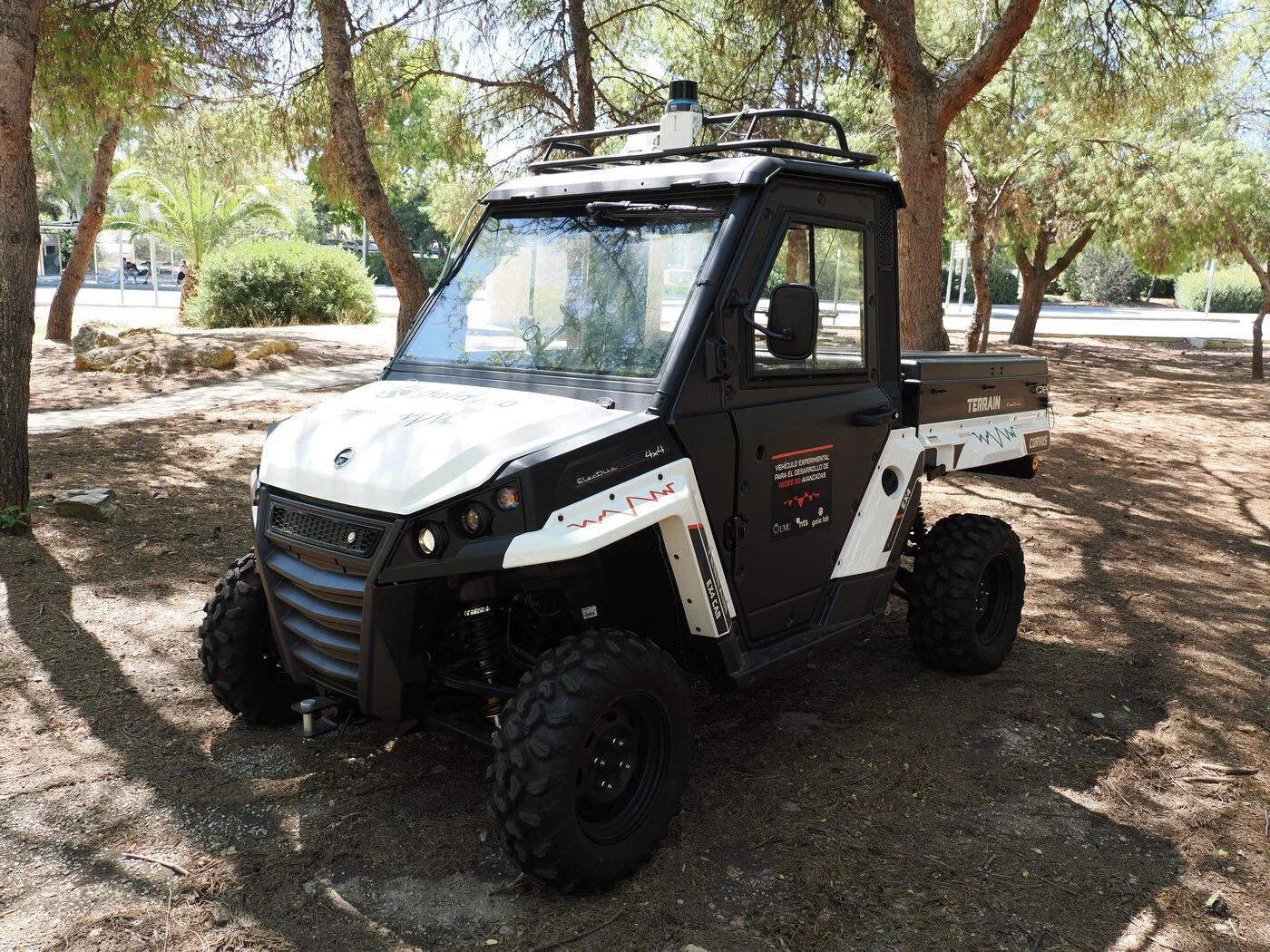
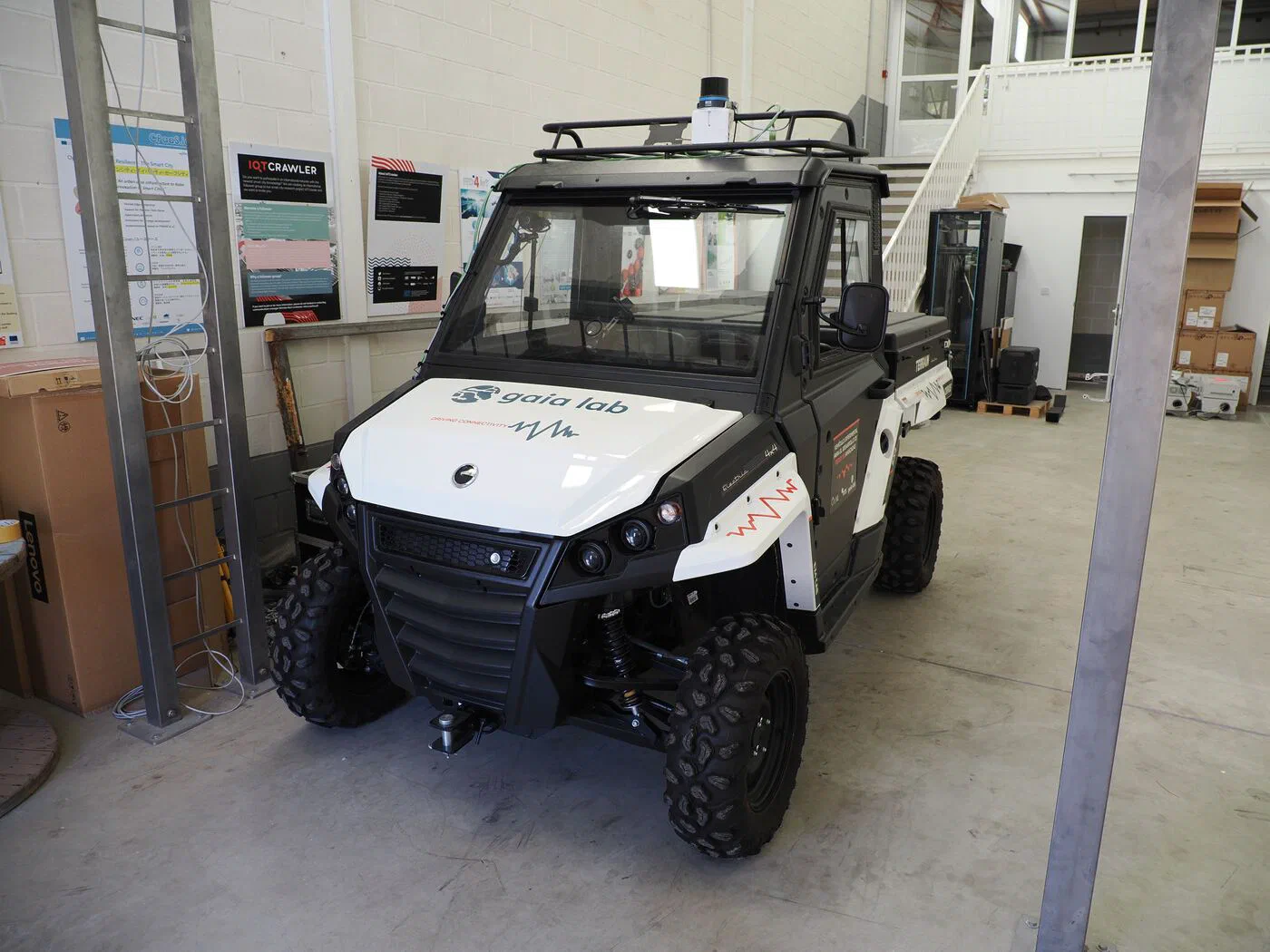
The mobile edge of all this is our experimental vehicle: a laboratory on wheels, built on an electric UTV, which integrates a 3D LiDAR, high-precision GNSS, on-board and edge computing, a 5G modem, an IoT radio, a V2X OBU and a multispectral camera. We will devote posts of its own to it; for now it is enough to say that it lets us test on the move, on real terrain, what we could previously only try out inside the lab.
What this blog is for #
At Gaia Lab we generate a lot of material that fits neither in a scientific paper nor in a project deliverable: the notes from a deployment that took a week, the exact configuration that got a gNB working, the measurements from a test campaign or the script of a demonstration. Until now that knowledge was scattered across notebooks, internal wikis and the memory of whoever did the work. This blog is where we will write it up properly, for the group itself and for anyone working with similar technologies.
Essentially, we will publish four kinds of posts:
- Deployment notes. What we installed, how we configured it and what problems we ran into.
- Demonstrations. The demonstrations we prepare for the projects, with video where it exists.
- Results. Measurements and analyses from the experimental campaigns, together with the conditions under which they were obtained.
- Technical guides. Reproducible, step-by-step procedures.
We do not intend to replace the group’s formal publications: whenever a post relates to a paper or a project, we will link to it. Posts are signed by the laboratory and reviewed by those who carried out the work described.
Lines of work #
Posts will be grouped around the lines the laboratory works on:
5G SA and B5G networks. Deployment and operation of the campus’s private network, integration of cores and radios from different vendors and open-source projects, and trials such as 4K video transmission resilient to coverage loss or handover prediction between base stations.
V2X vehicular communications. Cooperative messaging between vehicles and infrastructure over PC5 / ITS-G5 and over 5G, using the campus roadside units and the vehicle’s OBU.
IoT. Integration of the campus’s Internet of Things sensors and platforms with the vehicle’s data, over the LoRaWAN infrastructure.
Edge computing. Network services, sensor processing and artificial intelligence close to where the data is generated, both in the campus data centres and in the vehicle’s server-class computing.
Programmable networks. Work on the SONiC backbone, OpenFlow, P4 and the PTP synchronisation that underpin the rest of the infrastructure.
Digital twins. Digital replicas of the campus, fed with georeferenced multi-sensor data and run at the network edge, to observe and anticipate the behaviour of what has been deployed.
How to follow the blog #
All posts are collected in the Posts section, from newest to oldest, and grouped on the Tags and Projects pages. So that you do not have to visit the site to find out whether there is anything new, the blog provides an RSS feed at the index.xml path, which can be added to any feed reader. It is the simplest way to receive updates and the one we recommend.
We will adjust the format as we publish. If something proves useful, or if you spot an error, we would be grateful if you let us know through the ANTS group’s contact channels.